
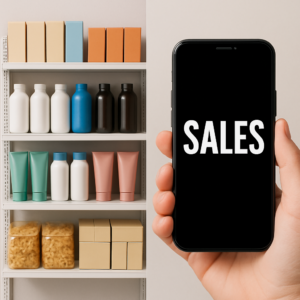
In the immediate past, the success of consumer products heavily relied on something very tangible: shelf space. Brands were ready to invest millions into retail partnerships, packaging design, and marketing promotions just to secure prime physical placement — eye-level shelves, end caps, and check-out counters. These spots were seen as the ultimate prize, offering visibility and the psychological edge of being “seen first.”
But today, we are able to witness the dramatic shift towards each brand adapting to the digital era in order to stay alive in the surging competition.
We now live in an age where the “shelf” has multiplied, morphed, and moved — beyond the store and into our screens. Whether it’s an online marketplace, a retailer’s app, or a smart home device recommending your next purchase, the shelf has gone digital. As a result of this contrasting shift, the rules of the game have changed.
The Power Shift: Retailers as Gatekeepers of Attention
Retailers have evolved from being mere distributors to powerful curators of customer experience. They control how, when, and where consumers discover products. Whether through physical planograms or digital merchandising algorithms, they decide which brands get visibility — and which don’t.
Think about this: when you open a retail app, do you scroll endlessly through options? Or do you tend to click on what’s shown on the homepage or “recommended for you” section? Exactly. That is where the power is present.
Retailers now hold the power of having the key to discovering new products:
In-store navigation: Themed displays, seasonal gondolas, and QR code-enabled shelves drive impulse decisions.
Mobile apps & websites: Personalized suggestions based on purchase history, trending products, and paid placements.
Search algorithms: Much like Google, retail platforms rank and showcase products based on relevance, sales, customer reviews, and bidding (in some cases).
Loyalty ecosystems: Exclusive access to certain brands or “members-only” discounts further shapes consumer choices.
Unfortunately, the harsh reality is that most customers don’t search endlessly for the specific brand. If your brand doesn’t show up in the first scroll or aisle — chances are, it’s not getting bought.
What This Means for Brands
In this new landscape, traditional marketing alone doesn’t cut it. Brands must now collaborate strategically with retailers to win visibility — often by co-investing in promotional campaigns, aligning with retailer data strategies, and optimizing for their digital ecosystems.
Here’s what brands need to think about:
Are we winning in search rankings within the retailer’s digital shelf?
Are we showing up in “recommended” sections powered by algorithms?
Are we part of curated experiences like seasonal launches or bundled offers?
Are our products easily found both online and offline, with consistent storytelling?
The Shelf Is Everywhere — and It’s Always Moving
The new “shelf” is fluid. It moves with every scroll, every search, every tap. It’s personalized, data-driven, and ever-changing. The brands that thrive today are those that don’t just fight for placement — but understand the entire customer journey, and build strong, data-powered partnerships with their retail allies.